Is the PSI AUDIO AVAA Worth $3,300? I Tested It in 10 Studios.
Everyone asks if active bass traps work. After testing them in 10 studios over two years, I finally have an answer backed by actual data.
The PSI AUDIO AVAA C214 is the only commercially available, fully automatic active bass absorber on the market. A cylinder about the size of a trash can that claims to deliver the equivalent of 45 times its own volume in passive absorption.
At roughly €3,300 per unit, you'd expect some serious results. So I took a pair of them to 10 different studios, did before-and-after measurements with Room EQ Wizard, and interviewed the people working in those rooms to see if the numbers matched what they actually heard.
I've made all the measurement and survey data from these 10 rooms available for you to download here if you want to dig into the details yourself.
Here's what the data told me.
The Real Win Isn't What You Think
Most people expect bass absorbers to flatten the frequency response. That's the wrong thing to look for.
Across all 10 rooms, frequency response improvements were moderate. Peaks got reduced by maybe 1 to 5 dB on average. Occasionally up to 10 dB at specific room modes, but that was the exception.
Where these units really showed their teeth was in the RT60 decay time. On average, I measured a 0.5 second reduction at the primary room modes being targeted. In the best cases, that number went up to a full second.
And that matters way more than a flatter curve on your measurement screen. A room mode ringing for 1.4 seconds at 34 Hz is going to mess with every low-end decision you make. Cut that down to 0.4 seconds, and suddenly kicks feel tighter, bass notes stop piling up, and you're not second-guessing every mix.
When They Worked Best
The most dramatic result came from Mateo's room. Small basement studio, roughly 3.5 by 4 meters, basic DIY treatment. He had a nasty standing wave at 36 Hz that dominated everything.
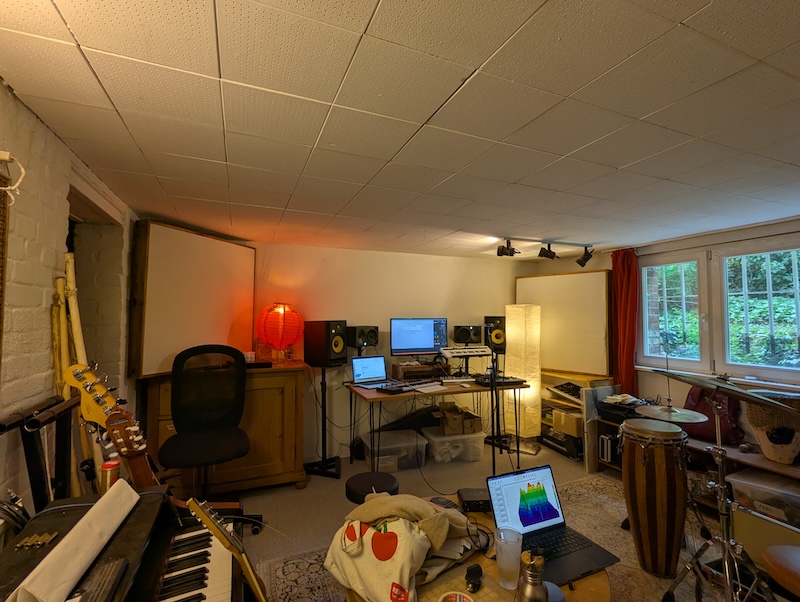
Two AVAAs in the back corners knocked that peak down by 10 dB and cut the decay time from over a second to 0.25 seconds. That's a reduction of 0.84 seconds from two units.

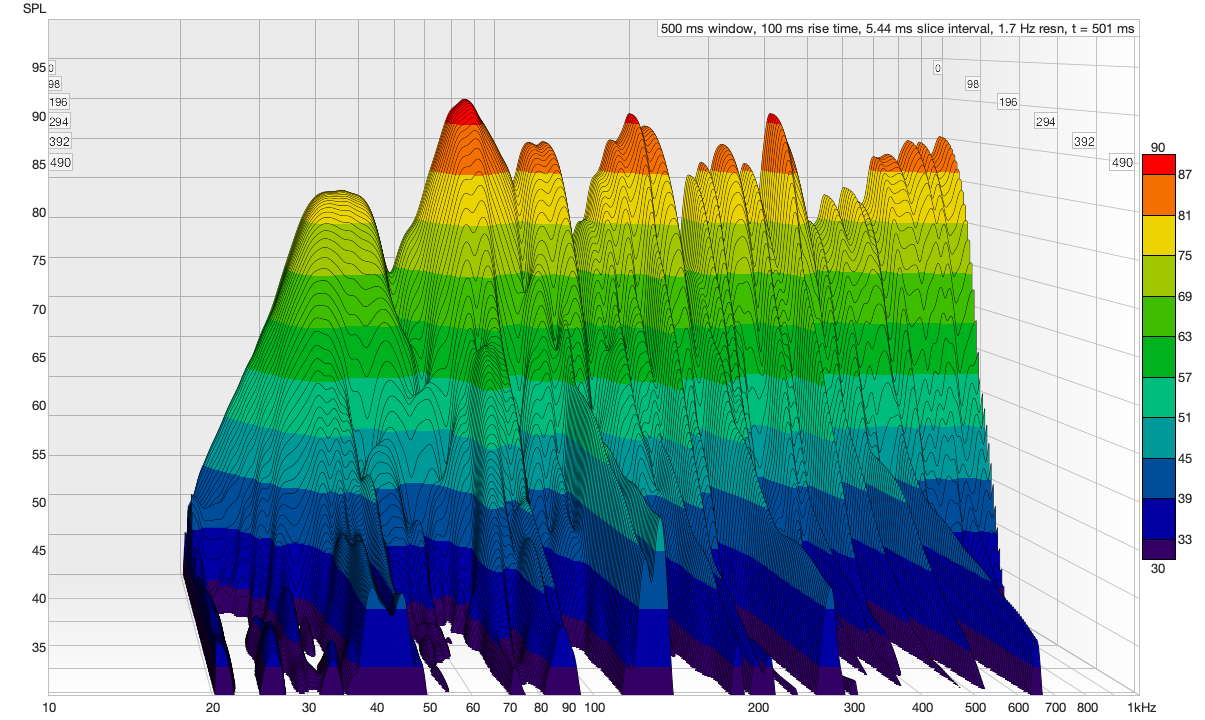
His take? The low end became more tangible, sharper defined, and spatially clearer. He stopped needing to go to other studios to check his low end. That alone says a lot.
Pascal's room told a similar story, even though it was already well-treated with 40 cm deep corner traps and a ceiling cloud.
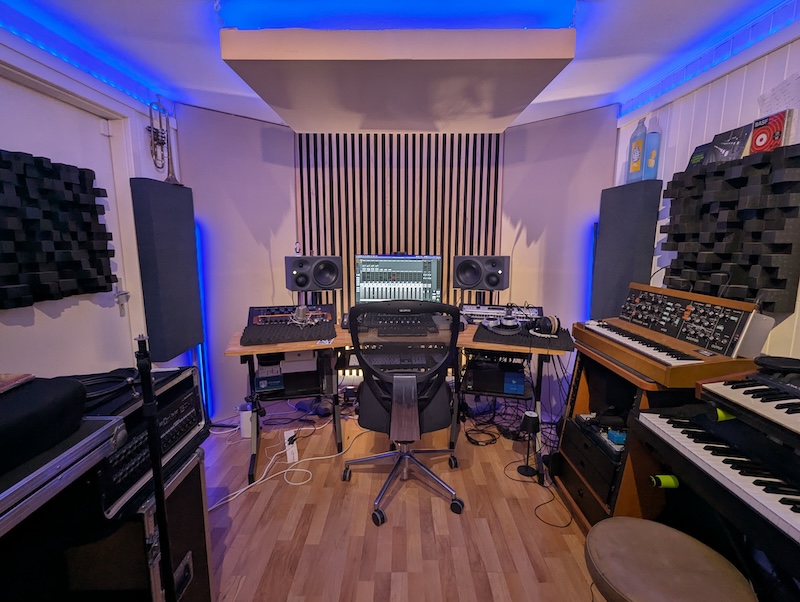
The decay time at 34 Hz dropped from 1.4 to 0.4 seconds.
His words: "I was able to make decisions more confidently when mixing the low end, having to check less on headphones."


Seven out of nine participants rated the improvement at 7 out of 10 (where 5 means no change). Two gave it an 8. That's a consistent pattern across very different rooms.
When They Didn't Work
Lisa's room was the one case where the AVAAs fell short. Big space, 3.6 by 6.5 meters, well-treated with 24 absorbers. But there was a window directly behind the speakers.

That window was bleeding out low-end energy before it even had a chance to build up. The frequency response showed a massive peak at 52 Hz with steep energy drops on both sides. The AVAAs reduced that peak by about 4 dB, but they couldn't recreate energy that simply wasn't there.

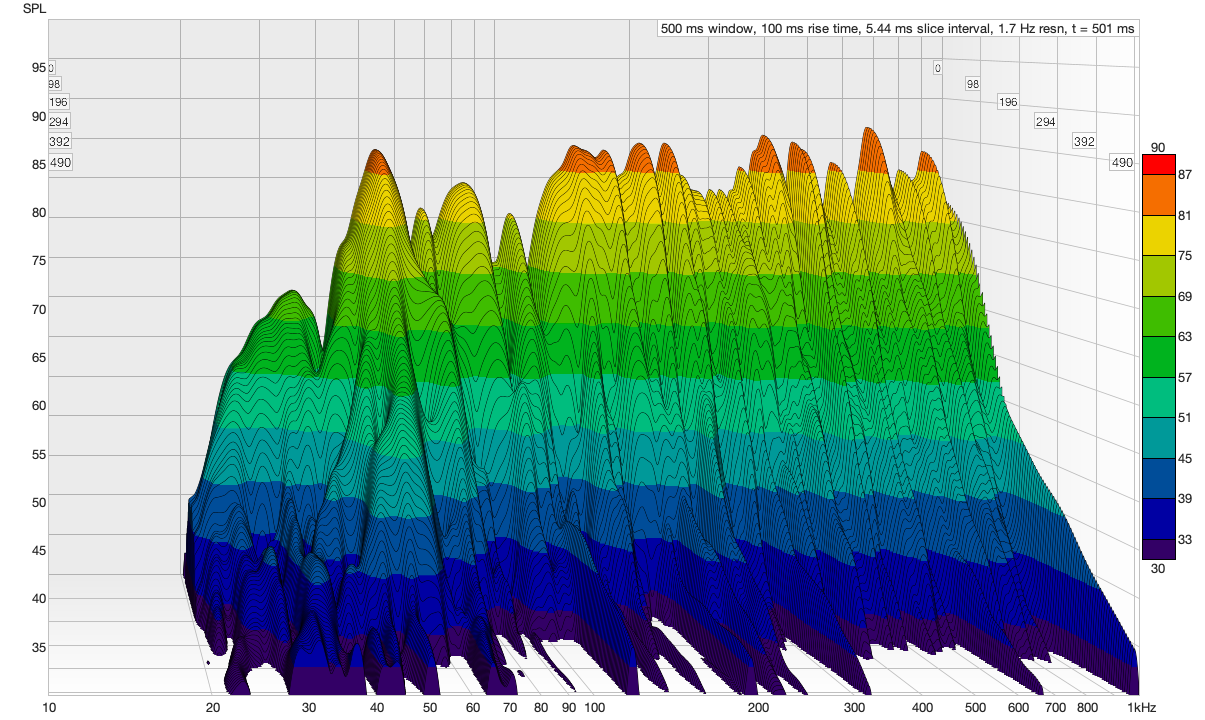
Her solution ended up being a subwoofer, not more absorption. Because the problem was structural, not modal.
This is the single most important thing to understand about active bass traps: they need sound pressure to absorb. If your room has a construction issue preventing that pressure from building up, no amount of absorption (active or passive) will fix it.
PSI AUDIO themselves say the AVAA works in roughly 80% of cases. Lisa's room was the other 20%.
A Few Things Worth Noting
A few patterns stood out across these 10 rooms.
Treating one problem can reveal another. In several studios, damping a dominant room mode uncovered dips and issues that were previously masked. This isn't a flaw in the AVAAs. It's how acoustic treatment works in general. You peel back one layer and find the next thing to deal with.
One unit helps, two help more. In every room where I compared single vs. pair performance, two units always outperformed one. If you're considering these, plan for a pair from the start.
They work alongside room correction software, not instead of it. The AVAAs handle actual acoustic behavior (decay time, modal energy). Room correction tools like Sonarworks or Trinnov handle tonal balance at the listening position. Two completely different jobs.
And an interesting one: Alex reported that his vocal recordings improved because the room was cleaner. Less low-mid processing needed after tracking. Not something I was specifically looking for in this test, but it makes total sense.
The Honest Verdict
These units do what they claim. Getting absorption below 50 Hz from something the size of a trash can is remarkable.
But at €3,300 per unit, you need to be realistic about what you're getting. Two units give you a meaningful improvement at specific frequencies. Full low-end control? You'd probably need four or more.
If you're planning a room from scratch, passive treatment designed as a complete system is still the smarter move. You can address the full frequency range, not just targeted low-end modes.
If you already have a room with persistent low-end issues that passive treatment physically can't reach (because you don't have space for 60+ cm deep absorption), and there are no structural problems stealing your bass energy, then the AVAAs are a legitimate solution worth considering.
In my own decently treated room, I saw moderate improvements. Personally, I wouldn't keep them at that price. The benefit didn't justify the cost for my situation.
Active bass traps work. The data confirms it across 10 rooms. But they're a precision tool for a specific problem, not a magic fix for every low-end issue. Know what your room actually needs before you spend the money.
The biggest takeaway from testing 10 rooms? Every single one needed something different. If you're not sure what your room actually needs, I do 1-on-1 consulting sessions where we look at your measurements, your space, and your goals and figure out exactly where to focus.